
Whitetail Sanctuary Sense
by Scott Bestul
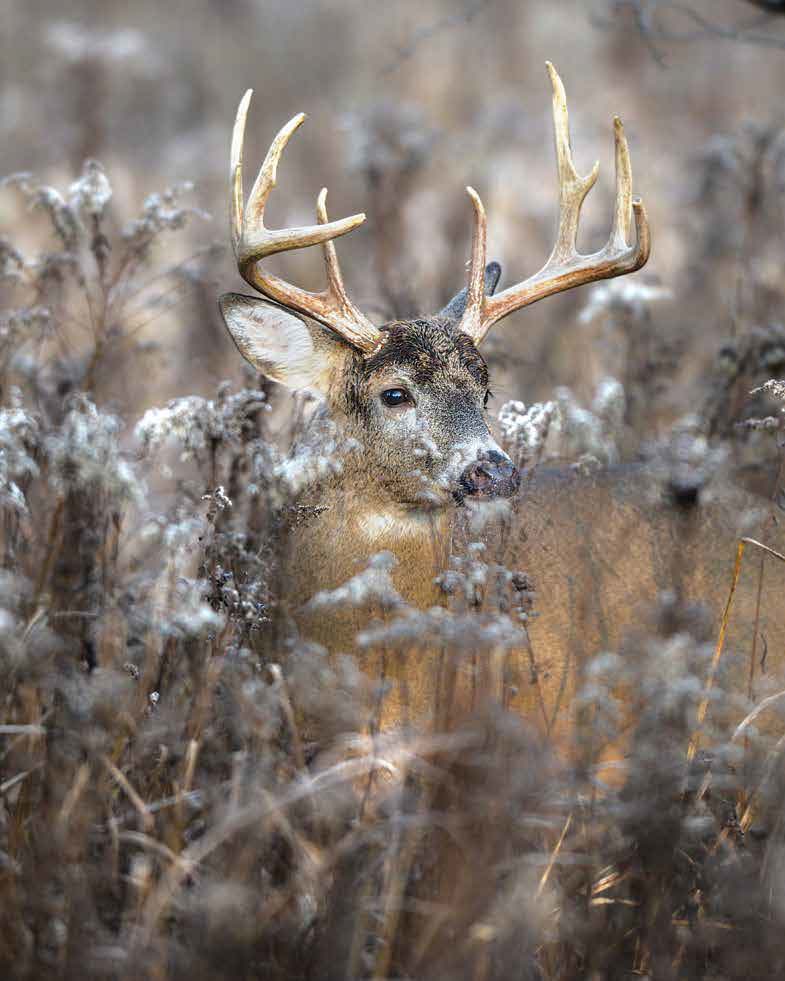
Everyone talks about creating sanctuaries, but few know how to do it effectively. Follow this common-sense approach to managing safe spots for deer on your property.
We called him “The Flyer Buck” in a nod to our group’s unimaginative system for naming deer. The 5-½-year-old whitetail had sported a flyer point off his G-2 since he was 2-½ that even then turned our heads. But as impressive as he was as a juvenile, we believed he’d be something special if he could endure the gauntlet of local hunting pressure. His survival to maturity was no small miracle for which to pray. Although The Flyer seemed to like the small (100-acre) farm where he’d spent his formative years, local properties were hunted reasonably hard, and of course, there were three public tracts within his home range.
But hoping was the best we could do, and to our group’s credit, those hopes weren’t entirely unrealistic. Several years before The Flyer was a fawn, we’d created a sanctuary on the small property by hinge-cutting trees to create a dense bedding area. Then we’d committed to staying out of that 5 acres of nastiness, only creeping into its confines to retrieve a wounded deer or search for shed antlers in March. Those occasional forays into that safe space for whitetails proved they appreciated our efforts. Deer trails resembled cattle paths, scrapes peppered the landscape, and rubs appeared on any tree worth a buck’s attention. The place screamed for a stand, but we observed our commitment to stay the heck out.
Fortunately, just as several other nice bucks had done, The Flyer buck settled into our sanctuary and called it home. Of course, he wandered elsewhere, feeding in the lush farm fields and our food plots nearby, following buddies in his bachelor group on summer walkabouts, and chasing does during the November rut. But when it came time to settle into a secure bedroom, The Flyer seemed to view our sanctuary as his go-to spot. That helped him survive two more hunting seasons, and as he grew his fourth set of antlers, we recognized The Flyer as one of the better bucks our small property had ever grown.
The ABC’s of Sanctuaries
It’s no secret that whitetails are sensitive to areas that are dangerous. As a prey species, deer have been practicing evasion — avoiding the chase of a wolf or coyote, the pounce of a cougar or bear or a hunter’s bullet — for as long as they’ve been a species. If you need proof, watch a whitetail feeding in a field or food plot. Rather than burrowing its head into the groceries like a cow, it’s constantly jerking up to scan for danger, and a typical feeding session lasts minutes instead of hours. When a whitetail walks down a trail, it’s eyes, ears and nose are constantly scanning for peril. Deer recognize danger spots and learn them in a hurry.
Conversely, whitetails also learn places where they feel safe and are rarely threatened. You can get some good campfire debates going about whether deer — particularly older bucks — are “smart” because they find hidey holes where they’re rarely bothered and gravitate toward those spots. I don’t think whitetails are capable of deductive reasoning. (“Hey, this is an abandoned farmstead that most people are going to ignore, so I’m gonna bed there a lot.”) Instead, they repeat behaviors and revisit places that have helped keep them alive. And we’ve all witnessed the natural spots where the deer we hunt feel safe: that thick cedar swamp, a brushy creek bottom, a densely wooded hillside, a gnarly fence line or even a swath of grass surrounded by ag fields.
Savvy whitetail managers attempt to create such places on the properties they hunt and manage, essentially giving deer a safe zone — or multiple ones — where they rarely encounter their major predator: human beings. Creating such sanctuaries attracts more deer to a property and allows the side benefits of increased daylight movement and more hunting opportunities. Not surprisingly, sanctuaries are also some of the toughest concepts to sell to hunters. We want to hunt every square inch of the properties we can access, particularly if they’re relatively small. Still, as the Flyer Buck and several others have taught me, staying out of a portion of a property might be difficult at first. But when the result of that effort means better hunting — more on that later — the reward is more than worth the effort. Here’s how to make it happen.
Getting Started
Sometimes choosing a spot for a sanctuary is pretty darn simple. You just pick a site where deer already feel safe. On the central Wisconsin property where I learned to hunt, we had a chunk of creek-bottom spruce, pine, alder and marsh grass we called “The Big Swamp.” The 40-acre bog was an ideal place for pressured whitetails to escape pressure during the Badger State’s nine-day firearms hunt. Displaying a restraint rare for the time — that was almost 50 years ago — the elders in our group stayed out of the Big Swamp for eight of the nine days of the season. When we made a drive through the tangle on the season’s last day, whitetails poured out of there like bees from a hive. Of course, if we’d been serious about growing big deer, we’d have stayed out of the Big Swamp entirely, but the elders weren’t that forward- thinking.
At any rate, natural dense-cover hideouts like that swamp are perfect for a sanctuary. Deer already want to be there, and they require little — if no — extra work to establish or maintain. Other examples include a cattail marsh, areas of recent logging — or a windstorm that leaves downed tree and tops — or a brushy hillside or, better, the convergence of several hillsides that deer use for bedding during various wind and weather conditions.
Of course, if no natural sanctuary exists, you must create one. Generally, I recommend a spot that’s already difficult to hunt because of terrain or prevailing wind directions. We all have spots that seem to scream for a deer stand, but when we hunt the area, we see few deer or spook the ones we spot. For many years, I hunted a farm in the famous Buffalo County, Wisconsin, the nation’s top producer of B&C bucks. I was a fairly inexperienced bowhunter then, and although I managed to tag a couple of mature bucks there, I screwed up on many more. One spot that I was super excited about was the confluence of three brushy coulees that were blown up by massive rubs and huge scrapes. I hung a stand there but never saw a mature buck from it. And I finally realized the funky thermals and conflicting winds made the spot nearly impossible to hunt effectively. That’s exactly the kind of spot that needs to be marked as hands-off and relegated strictly to growing — not killing — big whitetails. Sadly, I was not smart enough to recognize that then.
Sometimes, a property doesn’t sport the natural cover or terrain features that lend themselves to being safe spots for deer, and in that case, they must be created. The sanctuary discussed at the beginning of this story, which exists almost behind my house, is a perfect example. When my neighbor and I started looking hard at the cover on the property, we realized that a couple of spots offered almost nothing to deer. Those areas grew trees, but they were low-value species that would never be marketable timber, nor were they producing mast or cover for whitetails. So we fired up our chainsaws and went to work, hinge-cutting species such as elm and box elder, and clear-cutting small pockets of birch and aspen. When we were finished, we had three pockets — none bigger than 5 acres — of an absolute deer paradise. In addition to creating a bunch of horizontal cover that could hide deer, we’d also opened up the canopy to admit a bunch of sunlight. The latter resulted in a flush of young growth — saplings and berry brush — that deer used for browse and security. We designated each of those as sanctuaries and vowed to stay out of them.
Keeping it Alive
One of the hardest things to do when establishing a sanctuary is maintaining the vow to not hunt the place. I’ve created several such spots through the years, and almost invariably, a familiar pattern emerges: Deer find the spot and use it regularly. Deer sign in and around the hidey hole explodes, and the temptation to dive in and hunt the place will soar. Resist it the best you can. It might be OK to slip in an occasional rut hunt — when deer are more mobile and less likely to return to favored bedding areas consistently — but maintaining the hands-off policy is always the best bet.
Because nature is dynamic and ever-changing, don’t count on your sanctuary to stay the same. Trees mature and shade out brush and saplings that are attractive to deer, and you might need to revisit your hinge - and clear-cut areas every few years to drop more trees and keep the cover young, dense and vital. I also like to expand sanctuary areas every few years by taking down trees along the edge and gradually growing the spot where it’s appropriate. In my experience, the best time to do that is late winter and early spring. That’s long after the hunting season and less intrusive to deer, and it optimizes the chance for young trees, brush and forage species to take full advantage of the growing season.
Obviously, one of the main reasons for creating a sanctuary is increased hunting opportunity. I’m all for that, of course, but like any stand or blind setup, you’ll want to do so carefully. When I hang a stand or erect a blind near a sanctuary, I immediately determine the best winds for hunting the spot, as well as the absolute no-no conditions when it should never be visited. I’m also uber-aware of my approach to and exit from those ambush sites. If deer bedded in the sanctuary can see, hear or smell me as I walk to and from stands, hunting the spot is simply not worth the risk. Using permanent shield crops such as switchgrass provide an excellent way to create bulletproof entry and exit routes to any stand — especially those near a sanctuary.
Conclusion
All that sounds like an awful lot of work, but the rewards have certainly been worth it. The Flyer Buck was only one mature whitetail that adopted our sanctuaries and used them consistently. In fact, those safe spots were so attractive to the Flyer that they shrunk his territory, creating a homebody buck that rarely ventured off the property. And when my neighbor’s then-15-year-old son killed the Flyer during a November gun hunt, the smile on that boy’s face was all the reward we needed for the time and effort to create the safe spots the buck called home.